
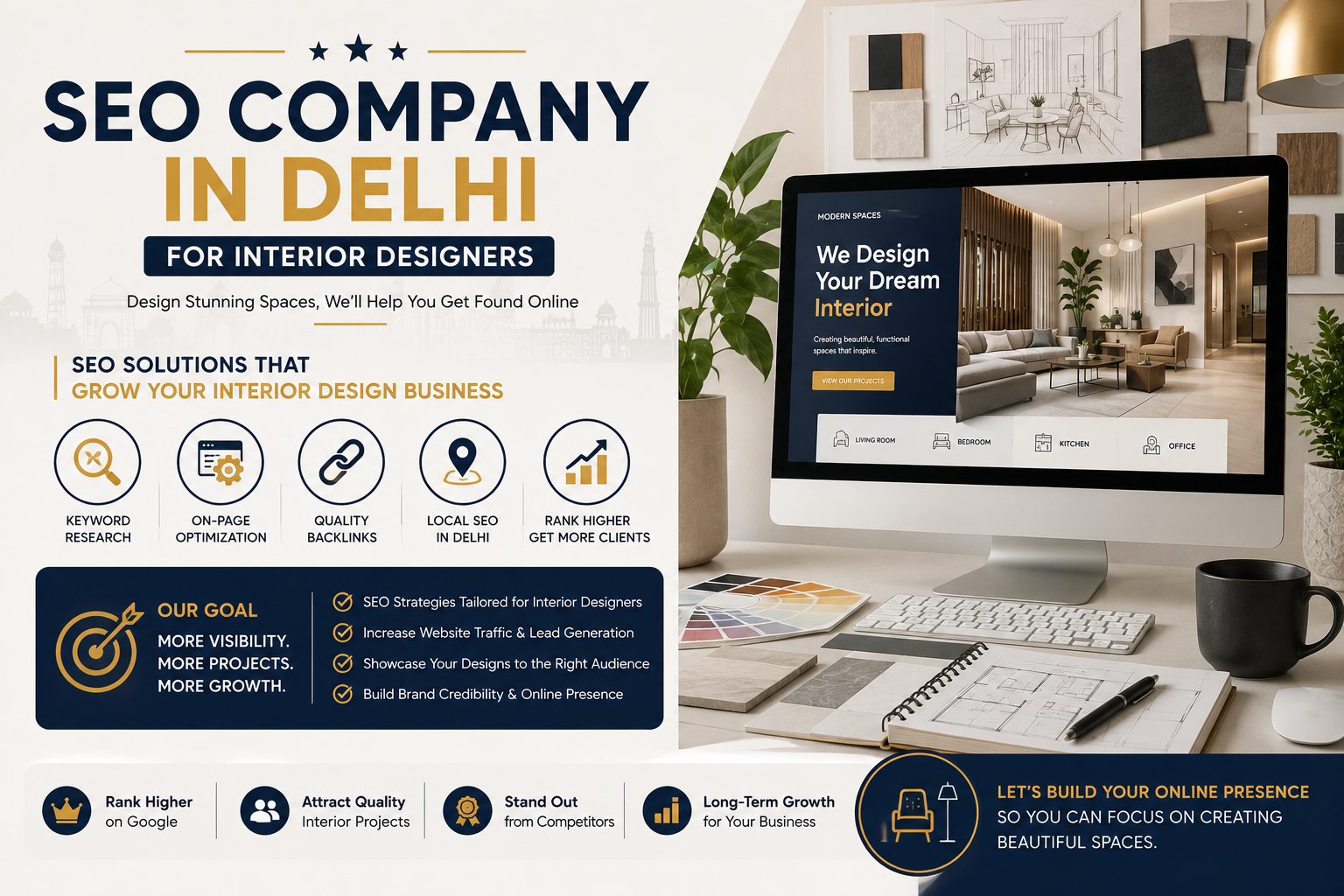
Interior design is a visual industry. Most people don’t hire a designer after seeing an advertisement. They usually search online, compare portfolios, read reviews, and then decide whom to contact. Because of this behavior, search engine optimization (SEO) has become an important part of growing an interior design business.
If you’ve searched for SEO Company in Delhi for Interior Designers, chances are you’re trying to understand how SEO actually helps this industry rather than looking for complicated technical terms. This guide explains the process in a practical way, using examples and real-world situations.
Whether you’re an interior designer, a student learning digital marketing, or a blogger researching SEO strategies, this article will help you understand how SEO works specifically for interior design businesses.
Why Interior Designers Need SEO Today
People rarely open a phone directory anymore when they need an interior designer. Instead, they search phrases like:
- Interior designer near me
- Home interior designer in Delhi
- Office interior design services
- Modular kitchen designer
- Luxury interior designer
If a website appears on the first page of Google for relevant searches, it naturally receives more visibility.
SEO isn’t about tricking search engines. It’s about making a website useful, organized, and relevant so search engines understand what it offers.
A Simple Example
Imagine two interior designers operating in the same city.
- The first designer has an attractive website, but no blog, very few project pages, and almost no information about locations served.
- The second designer publishes project case studies, explains design styles, answers common client questions, and regularly updates the website.
- Over time, Google has much more information to understand the second website. As a result, it has better opportunities to appear in search results.
That is how SEO creates long-term visibility.
Understanding SEO for Interior Design Businesses
SEO is the process of improving a website so that search engines can easily understand its content and present it to users searching for related topics.
For interior designers, SEO usually focuses on:
- Project portfolios
- Service pages
- Local SEO
- Design inspiration articles
- Image optimization
- Fast website performance
- User experience
Unlike paid advertising, SEO generally builds results gradually over time.
Local SEO Matters More Than Most Designers Think
Most interior design businesses work within specific cities or regions.
Someone living in Delhi usually searches for designers nearby rather than professionals located hundreds of kilometers away.
That’s where local SEO becomes important.
A well-optimized local presence may include:
- Accurate business information
- Consistent address details
- Service area pages
- Customer reviews
- Google Business Profile optimization
- Location-based content
Real-Life Situation
Suppose an interior designer mainly serves South Delhi.
Instead of creating one generic page titled “Interior Design Services,” they may also create useful pages discussing:
- Living room designs in South Delhi
- Apartment interior ideas
- Office renovation projects nearby
This helps search engines understand both the service and the location.
Important SEO Elements for Interior Designer Websites
Quality Portfolio Pages
Images often attract visitors first.
Each completed project should have:
- Original photographs
- Project description
- Design challenges
- Materials used
- Location (when appropriate)
- Client goals
Instead of uploading only images, explaining the story behind each project provides additional value.
Helpful Blog Content
Many people begin researching long before hiring an interior designer.
They search questions like:
- Which flooring lasts longer?
- How much does interior design cost?
- Modern vs contemporary interiors
- Small apartment design ideas
Publishing educational content answers these questions while helping search engines understand website expertise.
Fast Loading Speed
Interior websites usually contain many large images.
If pages take too long to load, visitors often leave before exploring the portfolio.
Compressing images, improving website performance, and reducing unnecessary elements can improve user experience.
Mobile-Friendly Design
Many homeowners browse design ideas on mobile devices.
A responsive website allows visitors to:
- View project galleries
- Read articles
- Contact designers
- Request consultations
without frustration.
Keyword Research for Interior Designers
Keyword research helps identify what potential clients actually search online.
Examples include:
- Interior designer in Delhi
- Home interior design
- Modular kitchen design
- Office interior designer
- Bedroom interior ideas
- Luxury apartment interiors
- Interior renovation services
- Commercial interior design
Instead of repeating the same phrase everywhere, it’s better to naturally include related terms throughout the content.
This creates a better reading experience while helping search engines understand context.
Content That Builds Long-Term Visibility
Many websites only publish service pages.
However, informational content often attracts visitors much earlier in their decision-making journey.
Useful topics include:
- Design Guides: Explain popular design styles with examples.
- Budget Planning: Discuss realistic renovation costs and budgeting tips.
- Material Comparisons: Compare wood, laminate, marble, granite, or engineered materials.
- Space Planning: Offer practical advice for small apartments or compact offices.
Helpful articles remain useful for years, making them valuable long-term SEO assets.
Technical SEO Often Gets Ignored
Even excellent content can struggle if search engines cannot properly crawl the website.
Some important technical areas include:
- Clean website structure
- XML sitemap
- Secure HTTPS connection
- Optimized URLs
- Internal linking
- Broken link fixes
- Structured headings
- Image alt text
These improvements usually happen behind the scenes but significantly improve website quality.
User Experience Also Influences SEO
Visitors stay longer when websites are easy to use.
Simple improvements include:
- Clear navigation
- Readable typography
- Logical page layout
- Easy contact information
- Fast image galleries
- Helpful calls to explore related pages
When users find information quickly, they are more likely to continue browsing.
Common SEO Mistakes Interior Designers Make
Many websites unknowingly limit their search visibility.
Some common mistakes include:
- Copying content from competitors
- Uploading images without descriptions
- Ignoring local keywords
- Publishing very little content
- Using duplicate page titles
- Slow-loading image galleries
- Not updating older articles
- Missing internal links
Fixing these issues often improves website quality over time.
Measuring SEO Progress
SEO success isn’t measured only by rankings.
Useful indicators include:
- Growth in organic visitors
- Longer average session duration
- More pages viewed per visit
- Better keyword visibility
- Increased contact form submissions
- Improved local search appearance
Progress usually happens gradually rather than overnight.
SEO Trends Interior Designers Should Watch
Search behavior continues evolving every year.
Current trends include:
- Visual Search: Users increasingly search using images rather than text alone.
- AI-Generated Search Results: Search engines now summarize information directly within search pages.
Well-structured, helpful content has a better chance of being referenced.
- Experience-Based Content: Real project experiences, before-and-after examples, and authentic case studies often provide stronger value than generic articles.
Practical SEO Checklist
A practical workflow might include:
- Publish detailed service pages.
- Add location-specific content where relevant.
- Write educational blogs consistently.
- Optimize project images.
- Improve website speed.
- Use descriptive page titles.
- Create internal links between related pages.
- Keep contact information updated.
- Review website performance regularly.
- Refresh older content when necessary.
Small improvements made consistently usually produce better long-term results than major changes made once.
Final Thoughts
SEO for interior designers is not about finding shortcuts or chasing algorithms. It is about making a website genuinely useful for people searching for design ideas, renovation guidance, or professional services.
When a website combines helpful content, organized project portfolios, strong local relevance, and a good user experience, it naturally becomes easier for search engines to understand.
For students, SEO provides an excellent example of how content strategy and technical optimization work together. Bloggers can use these principles to create valuable articles, while professionals can better understand why consistent improvements often outperform quick fixes.
Good SEO takes patience. But when built on quality content and real expertise, the results tend to last much longer than temporary marketing campaigns.
